
Introduction
Except you’re concerned within the culinary arts or the meat business, you in all probability haven’t given a lot thought to the time period, “Saint Louis Model Pork Ribs”. Is that this dish some type of specifically spiced, spare rib recipe from St. Louis, MO? Did it originate in a colourful Saint Louis, 20th century restaurant, or perhaps it was first served at a St. Louis Cardinal baseball sport within the 1930s? All three hypotheses appear to be believable (1).
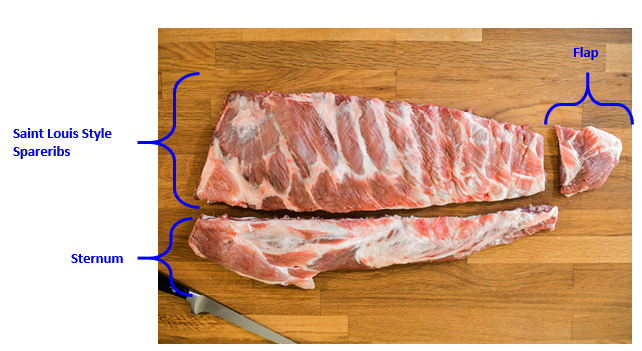
Saint Louis Model Pork Ribs at the beginning symbolize a selected butchery lower of pork ribs acknowledged by the USDA (1). Figures 1 and a pair of beneath display precisely how “St. Louis Model Pork Ribs” are butchered from hogs.
Figures 1 and a pair of. Butchery location of Saint Louis Model Pork Spare Ribs.
Due to their anatomical location barely above pork bellies (the pork lower used for bacon manufacture), St. Louis Model Pork Spareribs symbolize the highest-fat, (mixed muscle, bone and fats) lower in your entire pig. O.Ok. what’s the huge deal about Saint Louis Model Pork Spareribs?
As lots of our readers are conscious, the official USDA place to forestall heart problems (CVD) is to eat much less, no more saturated fats from fatty meats akin to Saint Louis Pork Spareribs. However, is there some dietary issue current in unadulterated, fatty pork meat, akin to present in Saint Louis Model Pork Spareribs that won’t solely stop CVD, however may stop osteoporosis and be therapeutic for all kinds of ailments which afflict the western world?
Dietary Menaquinones (Vitamin K2)
Saint Louis Model Pork Ribs have just lately (2016) been found to be one of many richest dietary sources of menaquinones (2), additionally collectively referred to as vitamin K2. Ingestion of menaquinones might cut back the chance of heart problems (CVD) (Three-10), osteoporosis (11-16), a number of sclerosis and different autoimmune ailments (17-23) and most cancers (24). The optimum consumption of the 10 dietary menaquinones (MK-Four, MK-5, MK-6, MK-7, MK-Eight, MK-9, MK-10, MK-11, MK-12 and MK-13) is unknown (2, 25-27). Nonetheless, it’s suspected that our present western food regimen is low or poor in whole menaquinones (MK-Four to MK-13) [2, 25-27].
For those who relish fatty cuts of pork (again ribs, spare ribs and Saint Louis Model ribs), you’re in luck, because the fattier the pork cuts, the extra menaquinones they comprise (2), which is an efficient factor to your bones (11-16), your coronary heart (Three-10) your immune system (17-23), and most cancers prevention (24). Desk 1 demonstrates the concentrations of the 10 menaquinones (MK-Four to MK-13) in each processed pork merchandise (Kielbasa, Pork sausage and Canadian bacon) and in recent cuts of pork meat.
Desk 1. The menaquinone content material (μg/100 g) of processed and recent pork meats (2), ND = not detected.
Processed pork meats confirmed a powerful correlation (r = zero.94) between whole fats content material of the assorted cuts and vitamin Ok content material. This strong relationship isn’t a surprise as vitamin Ok is a fats soluble vitamin, and it’s hydrophobic (water avoiding) nature (30) explains why it’s present in decrease concentrations in leaner cuts of pork, which comprise extra water and fewer fats. Accordingly, if you wish to enhance your dietary consumption of menaquinones, you need to eat fattier cuts of pork.
How about processed pork? Must you contemplate consuming big portions of Kielbasa, Pork sausage hyperlinks and patties and Canadian bacon to acquire your menaquinones? In all probability not a good suggestion as a result of all processed meats are extremely salted. Desk 2 beneath demonstrates the sodium (Na+) and potassium (Ok+) contents of the processed pork meats from research (2) and contrasts them to the recent pork meats additionally examined on this research (2).
Regardless of being concentrated sources of menaquinones (Desk 1), processed pork meat can also be a concentrated supply of Na+ with a 100 g serving averaging 1152 mg of Na+ and likewise exhibiting an unhealthy Ok+/Na+ ratio of zero.31. For adults the day by day advisable consumption of Na+ is 2,300 mg and for hypertensives, 1,500 mg or much less (28). The Institute of Medication (IOM) recommends a Ok+/Na+ ratio of two.04, whereas up to date Paleo diets preserve Ok+/Na+ ratios between 5.zero to 10.zero or increased (28, 29). Therefore, for our stone age ancestors, dietary Ok+/Na+ ratios beneath 1.zero (as current in processed pork meat) would have been unimaginable (28, 29).
In distinction, recent cuts of fatty pork usually are not solely wealthy sources of dietary menaquinones but additionally preserve healthful low Na+ concentrations along with excessive Ok+ concentrations (Desk 2). Therefore, recent (unadulterated) pork, notably fatty cuts symbolize wonderful meals selections to take care of excessive intakes of menaquinones whereas concurrently protecting your Na+ consumption low and Ok+ excessive.
Desk 2. The sodium (Na+) and potassium (Ok+) contents of processed and recent pork meats, together with their (Ca2+) and magnesium (Mg2+) contents.
The Dietary Origin of Menaquinones
Vitamin K1, often known as phylloquinone is probably the most ample type of vitamin Ok in our food regimen and is present in highest concentrations in leafy, inexperienced greens. Our our bodies have the capability to transform K1 into menaquinones, however solely into MK-Four (30). All different menaquinones (MK-5 to MK-13) are synthesized by micro organism and enter the human meals chain both by dietary sources (notably fermented meals) or from resident micro organism in our guts (25, 26, 30).
Just lately (2018-17), correct menaquinone measurements have been reported for fermented dairy merchandise, notably cheeses (31, 32). Desk Three beneath exhibits the degrees of menaquinones (MKs) in quite a lot of cheeses (31). As you possibly can see from this desk, quite a lot of cheeses symbolize extremely concentrated meals sources of menaquinones, consumption of which might usually be a very good factor from a dietary perspective, as dietary menaquinones might cut back the chance of heart problems (CVD) (Three-10), osteoporosis (11-16), a number of sclerosis and different autoimmune ailments (17-23) and most cancers (24).
Sadly, as was the case with processed pork meats (Desk 2), cheeses are virtually universally excessive in salt, as might be seen from Desk Four beneath. All cheeses proven preserve Ok+/Na+ ratios significantly beneath 1.00 which symbolize unimaginable values from an evolutionary perspective (28, 29).
Along with the unimaginable evolutionary Ok+/Na+ dietary ratios current in cheeses; cheeses additionally preserve unimaginable Ca2+/Mg2+ ratios which might have by no means been consumed by ancestral people earlier than the appearance of animal husbandry and dairy consumption (29, 33). Beneficial Ca2+/Mg2+ ratios are about 2.00 (34), that means that you need to ingest about twice the quantity of calcium relative to magnesium you receive out of your food regimen. Distinction this suggestion to the typical Ca2+/Mg2+ ratio of 24.04 present in cheeses (Desk Four) – that means that cheeses comprise ten occasions extra calcium than magnesium, in comparison with advisable Ca2+/Mg2+ ratios (34).
Desk Three. The menaquinone content material (μg/100 g) of varied cheeses (31), NM = not measured.
Desk Four. The sodium (Na+) and potassium (Ok+) content material of varied cheeses, together with their (Ca2+) and magnesium (Mg2+) content material.
O.Ok. what are the well being penalties of consuming monumental quantities of calcium relative to magnesium, even if you happen to receive the well being selling dietary menaquinones present in fermented cheeses? And what are the hostile well being penalties of consuming meals akin to cheeses and processed meats loaded with salt and containing Ok+/Na+ ratios of lower than 1.00?
Excessive calcium intakes relative to low magnesium intakes, which incessantly happen with excessive dairy consumption, are linked to an elevated threat for heart problems (34-41) and osteoporosis (42-47). Excessive salt diets enhance your threat for hypertension, stroke, heart problems (28), autoimmune illness (48-57), gastric ulcers (58-63), all cancers (64-83), and ocular cataracts (84-92).
Let’s now take a step backwards and present you the evolutionary foundation for this seeming dietary conundrum which requires us to acquire enough dietary menaquinones from excessive fats meals however advises us towards consuming excessive fats salt laden cheeses and processed meats.
The Evolutionary Foundation for Menaquinones in Our Weight loss plan
John Speth, Ph.D., a world renown anthropologist/archaeologist, has been my pal and scientific colleague for nearly twenty years. He just lately printed a paper which gives the vitamin and anthropology communities with a strong perception into the evolutionary foundation for menaquinones within the human food regimen (93).
Sir Arthur Conan Doyle said, “There may be nothing extra misleading than an apparent truth.” Certainly, in his paper (93) John has eloquently identified an apparent dietary truth: People have been repeatedly consuming putrid, rotting and fermented meals because the Center Paleolithic period and certain earlier. This apparent truth had been apparently unknown to most anthropologists and dietary scientists, together with myself, till the publication of Dr. Speth’s paper in 2017.
In nature, the fermentation of fish, meat, vegatables and fruits is haphazardly carried out by varied bacterial species, notably by lactic acid producing micro organism (LAB) related to fashionable meals manufacturing together with the next 11 bacterial genera: Carnobacterium, Enterococcus, Lactococcus, Lactobacillus, Leuconostoc, Oenococcus, Pediococcus, Streptococcus, Tetragenococcus, Vagococcus and Weisella (94-96). Many species inside the LAB genera together with Lactococcus lactis (sub species. Cremoris) and Leuconostoc lactis synthesize excessive quantities of lengthy chain menaquinones (MK-Eight to MK-10) (97). Different bacterial species which ferment Emmental and Jarlsberg cheese akin to Propionibacterium freudenreichii produce excessive quantities of MK-9 (4H) (98). The micro organism (Bacillus subtilis) which ferments soybeans to make the Japanese meals, natto produce unusually excessive concentrations of MK-7 (25).
All dietary menaquinones derived from the bacterial fermentation of varied human meals, in the end enrich our food regimen with lengthy chain (MK-7 to MK-13) menaquinones, and have possible finished so for thousands and thousands of years (93). Optimum dietary menaquinones consumption has virtually definitely been intimately linked to the consumption of fermented meals since our genus, Homo’s, very beginnings greater than 2 million years in the past. Accordingly, these bacterially derived menaquinones have performed an necessary evolutionary function in figuring out up to date human dietary necessities.
Abstract and Sensible Implications
Fatty pork cuts akin to Saint Louis Model Pork Ribs symbolize a wonderful dietary selection for maximizing your consumption of lengthy chain (MK-7 to MK-13) menaquinones consumption with out growing your salt consumption or compromising your dietary Ok+/Na+ ratio. Consumption of lengthy chain dietary menaquinones cut back your threat for heart problems (CVD) (Three-10), osteoporosis (11-16), a number of sclerosis and different autoimmune ailments (17-23) and most cancers (24).
In distinction, three different main sources of dietary menaquinones within the western food regimen (cheese, processed pork meats, fermented soy meals (soy sauce, miso, natto) comprise extreme salt and calcium which yield evolutionarily unimaginable dietary Ok+/Na+ and Ca2+/Mg2+ ratios that enhance the chance for CVD (34-41), osteoporosis (42-47), autoimmune illness (48-57), gastric ulcer (58-63) all trigger most cancers (64-83), ocular cataract (84-92).
The evolutionary foundation for menaquinones in human vitamin comes not from just lately launched excessive salt processed meats, cheeses or soy merchandise (all of which can be excessive in menaquinones), however slightly from the evolutionary selective pressures derived from our species consumption of unadulterated bacterially fermented meals containing lengthy chain menaquinones for thousands and thousands of years.
Seeking to the Future
Though all types of vitamin Ok (K1, K2 and vitamin Ok precursors [menadione]) have therapeutic results, the longer chain vitamin K2 (notably MK-7 to MK-13) look like more practical in ameliorating persistent illness (99, 100) than vitamin K1 (phylloquinone).
An alternate dietary technique to maximise your consumption of lengthy chain dietary menaquinones exists with out growing salt or calcium and unbalancing your Ok+/Na+ or Ca2+/Mg2+ dietary ratios. This technique has been unknowingly instructed to increase human lifespan and has proven to extend the lifespan of bugs.
Keep Tuned – I’ll reveal this proof within the subsequent Paleo Weblog.
REFERENCE
1. https://en.wikipedia.org/wiki/St._Louis-style_barbecue2. Fu X, Shen X, Finnan EG, Haytowitz DB, Sales space SL. Measurement of a number of vitamin okay varieties in processed and fresh-cut pork merchandise within the U.S. meals provide. J Agric Meals Chem. 2016 Jun Eight;64(22):4531-5.
Three. Shea MK, Sales space SL, Weiner DE, Brinkley TE, Kanaya AM, Murphy RA, Simonsick EM, Wassel CL, Vermeer C, Kritchevsky SB; Well being ABC Research. Circulating Vitamin Ok is inversely related to incident heart problems threat amongst these handled for hypertension within the well being, growing old, and physique composition research (Well being ABC). J Nutr. 2017 Could;147(5):888-895
Four. Shea MK, Sales space SL, Miller ME, Burke GL, Chen H, Cushman M, Tracy RP, Kritchevsky SB. Affiliation between circulating vitamin K1 and coronary calcium development in community-dwelling adults: the Multi-Ethnic Research of Atherosclerosis. Am J Clin Nutr. 2013 Jul;98(1):197-208.
5. Shea MK, O’Donnell CJ, Hoffmann U, Dallal GE, Dawson-Hughes B, Ordovas JM, Value PA, Williamson MK, Sales space SL. Vitamin Ok supplementation and development of coronary artery calcium in older women and men. Am J Clin Nutr. 2009 Jun;89(6):1799-807
6. Gast GC, de Roos NM, Sluijs I, et al. A excessive menaquinone consumption reduces the incidence of coronary coronary heart illness. Nutr Metab Cardiovasc Dis. 2009 Sep;19(7):504-10.
7. Geleijnse JM, Vermeer C, Grobbee DE, Schurgers LJ, Knapen MH, van der Meer IM, Hofman A, Witteman JC. Dietary consumption of menaquinone is related to a diminished threat of coronary coronary heart illness: the Rotterdam Research. J Nutr. 2004 Nov;134(11):3100-5.
Eight. Beulens JW, Bots ML, Atsma F, Bartelink ML, Prokop M, Geleijnse JM, Witteman JC, Grobbee DE, van der Schouw YT. Excessive dietary menaquinone consumption is related to diminished coronary calcification. Atherosclerosis. 2009 Apr;203(2):489-93
9. Mayer O Jr, Seidlerová J, Vaněk J, Karnosová P, Bruthans J, Filipovský J, Wohlfahrt P, Cífková R, Windrichová J, Knapen MH, Drummen NE, Vermeer C. The irregular standing of uncarboxylated matrix Gla protein species represents a further mortality threat in coronary heart failure sufferers with vascular illness. Int J Cardiol. 2016 Jan 15;203: 916-22
10. Cundiff DK, Agutter PS. Heart problems dying earlier than age 65 in 168 international locations correlated statistically with biometrics, socioeconomic standing, tobacco, gender, train, macronutrients, and vitamin Ok. Cureus. 2016 Aug 24;Eight(Eight):e748. doi: 10.7759/cureus.748
11. Inaba N, Sato T, Yamashita T. Low-Dose day by day consumption of vitamin [C1] Ok (2) (menaquinone-7) improves osteocalcin γ-carboxylation: a double-blind, randomized managed trials. J Nutr Sci Vitaminol (Tokyo). 2015;61(6):471-80
12. Shiraki M, Shiraki Y, Aoki C, Miura M. Vitamin K2 (menatetrenone) successfully prevents fractures and sustains lumbar bone mineral density in osteoporosis. J Bone Miner Res. 2000 Mar;15(Three):515-21
13. Rønn SH, Harsløf T, Pedersen SB, Langdahl BL. Vitamin K2 (menaquinone-7) prevents age-related deterioration of trabecular bone microarchitecture on the tibia in postmenopausal ladies. Eur J Endocrinol. 2016 Dec;175(6):541-549
14. Knapen MH, Drummen NE, Smit E, Vermeer C & Theuwissen E. Three-year low-dose menaquinone-7 supplementation helps lower bone loss in wholesome postmenopausal ladies. Osteoporosis Worldwide 2013 24 2499–2507.
15. Kanellakis S, Moschonis G, Tenta R, Schaafsma A, van den Heuvel EG, Papaioannou N, Lyritis G & Manios Y. Modifications in parameters of bone metabolism in postmenopausal ladies following a12-month intervention interval utilizing dairy merchandise enriched with calcium, vitamin D, and phylloquinone (vitamin Ok(1)) or menaquinone-7 (vitamin Ok (2)): the Postmenopausal Well being Research II. Calcified Tissue Worldwide 2012 90 251–262.
16. Huang ZB, Wan SL, Lu YJ, Ning L, Liu C, Fan SW. Does vitamin K2 play a job within the prevention and remedy of osteoporosis for postmenopausal ladies: a meta-analysis of randomized managed trials. Osteoporos Int. 2015 Mar;26(Three):1175-86.
17. Riphagen IJ, Keyzer CA, Drummen NEA, de Borst MH, Beulens JWJ, Gansevoort RT, Geleijnse JM, Muskiet FAJ, Navis G, Visser ST, Vermeer C, Kema IP, Bakker SJL.Prevalence and Results of Purposeful Vitamin Ok Insufficiency: The PREVEND Research. Vitamins. 2017 Dec Eight;9(12). pii: E1334. doi: 10.3390/nu9121334
18. Lasemi R1, Kundi M2, Moghadam NB3,Four, Moshammer H1, Hainfellner JA5. Vitamin K2 in a number of sclerosis sufferers. Wien Klin Wochenschr. 2018 Could;130(9-10):307-313.
19. Kusano J, Tanaka S, Matsuda H, et al. K1 and Vitamin K2 immunopharmacological results on the peripheral lymphocytes of wholesome topics and dialysis sufferers, as estimated by the lymphocyte immunosuppressant sensitivity check. J Clin Pharm Ther. 2018 Jul 16. doi: 10.1111/jcpt.12747.
20. Myneni VD, Mezey E. Immunomodulatory impact of vitamin K2: Implications for bone well being. Oral Dis. 2018 Mar;24(1-2):67-71.
21. Hatanaka H, Ishizawa H, Hirano T et al. Results of vitamin K3 and K5 on proliferation, cytokine manufacturing, and regulatory T cell-frequency in human peripheral-blood mononuclear cells. Life Sci. 2014 Mar 18;99(1-2):61-Eight.
22. Meng Ok, Xu W, Hirano T et al. The results of vitamin K1 and vitamin K2 on the proliferation, cytokine manufacturing and regulatory T-cell frequency in peripheral blood mononuclear cells of paediatric atopic dermatitis sufferers. Exp Dermatol. 2018 Apr 26. doi: 10.1111/exd.13671.
23. Wei FF, Thijs L, Zhang ZY et al. The danger of nephrolithiasis is causally associated to inactive matrix Gla protein, a marker of vitamin Ok standing: a Mendelian randomization research in a Flemish inhabitants. Nephrol Dial Transplant. 2018 Mar 1;33(Three):514-522
24. Lamson DW, Plaza SM. The anticancer results of vitamin Ok. Altern Med Rev. 2003 Aug;Eight(Three):303-18
25. Walther B, Karl JP, Sales space SL, Boyaval P. Menaquinones, micro organism, and the meals provide: the relevance of dairy and fermented meals merchandise to vitamin Ok necessities. Adv Nutr. 2013 Jul 1;Four(Four):463-73
26. Beulens JW, Sales space SL, van den Heuvel EG, Stoecklin E, Baka A, Vermeer C. The function of menaquinones (vitamin K₂) in human well being. Br J Nutr. 2013 Oct;110(Eight):1357-68.27. Shea MK, Sales space SL. Ideas and controversies in evaluating vitamin okay standing in population-based research. Vitamins. 2016 Jan 2;Eight(1). pii: E8. doi: 10.3390/nu8010008.
28. Sebastian A, Cordain L, Frassetto L, Banerjee T, Morris RC. Postulating the most important environmental situation ensuing within the expression of important hypertension and its related cardiovascular ailments: Dietary imprudence in day by day collection of meals in respect of their potassium and sodium content material leading to oxidative stress-induced dysfunction of the vascular endothelium, vascular easy muscle, and perivascular tissues. Med Hypotheses. 2018 Oct;119: 110-119
29. Cordain L. Dietary traits of a recent food regimen based mostly on Paleolithic meals teams. J Am Nutraceutical Assoc 2002;5(Three):15–24.
30. Shearer MJ, Okano T. key pathways and regulators of vitamin okay perform and middleman metabolism. Annu Rev Nutr. 2018 Aug 21;38: 127-151
31. Vermeer C, Raes J, van ‘t Hoofd C, Knapen MHJ, Xanthoulea S. Menaquinone content material of cheese. Vitamins. 2018 Apr Four;10(Four). pii: E446. doi: 10.3390/nu10040446.
32. Fu X, Harshman SG, Shen X, Haytowitz DB, Karl JP, Wolfe BE, Sales space SL. A number of Vitamin Ok varieties exist in dairy meals. Curr Dev Nutr. 2017 Jun 1;1(6):e000638. doi: 10.3945/cdn.117.000638.
33. Cordain L, Hickey MS, Kim Ok. Malaria and rickets symbolize selective forces for the convergent evolution of grownup lactase persistence. Biodiversity in Agriculture: Domestication, Evolution, and Sustainability, edited by P. Gepts, T.R. Famula, R.L. Bettinger et al. Printed by Cambridge College Press. # Cambridge College Press 2012.
34. Rosanoff A, Dai Q, Shapses SA. Important nutrient interactions: does low or suboptimal magnesium standing work together with vitamin d and/or calcium standing? Adv Nutr. 2016 Jan 15;7(1):25-43
35. Varo P. Mineral aspect stability and coronary coronary heart illness. Int J Vitam Nutr Res. 1974;44(2):267-73
36. Sato H, Takeuchi Y, Matsuda Ok, et al. Analysis of the Predictive Worth of the Serum Calcium-Magnesium Ratio for All-Trigger and Cardiovascular Mortality in Incident Dialysis Sufferers. Cardiorenal Med. 2017 Dec;Eight(1):50-60
37. DiNicolantonio JJ, McCarty MF, O’Keefe JH. Decreased magnesium standing might mediate the elevated cardiovascular threat related to calcium supplementation. Open Coronary heart. 2017 Could 22;Four(1):e000617. doi: 10.1136/openhrt-2017-000617.
38. Park B, Kim MH, Cha CK, Lee YJ, Kim KC. Excessive calcium-magnesium ratio in hair is related to coronary artery calcification in middle-aged and aged people. Biol Hint Elem Res. 2017 Sep;179(1):52-58
39. Kosch M, Hausberg M, Westermann G, et al. Alterations in calcium and magnesium content material of pink cell membranes in sufferers with main hypertension. Am J Hypertens. 2001 Mar;14(Three):254-Eight
40. Kisters Ok, Wessels F, Küper H, et al. Elevated calcium and decreased magnesium concentrations and an elevated calcium/magnesium ratio in spontaneously hypertensive rats versus Wistar-Kyoto rats: relation to arteriosclerosis. Am J Hypertens. 2004 Jan;17(1):59-62.
41. Resnick LM. Ionic foundation of hypertension, insulin resistance, vascular illness, and associated issues. The mechanism of “syndrome X”. Am J Hypertens. 1993 Apr;6(Four):123S-134S.
42. Tucker KL, Hannan MT, Chen H, Cupples LA, Wilson PW, Kiel DP. Potassium, magnesium, and fruit and vegetable intakes are related to higher bone mineral density in aged women and men. Am J Clin Nutr. 1999 Apr;69(Four):727-36.
43. Ryder KM, Shorr RI, Bush AJ, Kritchevsky SB, Harris T, Stone Ok, Cauley J, Tylavsky FA. Magnesium consumption from meals and dietary supplements is related to bone mineral density in wholesome older white topics. J Am Geriatr Soc. 2005 Nov;53(11):1875-80
44. Stendig-Lindberg G1, Tepper R, Leichter I. Trabecular bone density in a two yr managed trial of peroral magnesium in osteoporosis. Magnes Res. 1993 Jun;6(2):155-63.
45. Impolite RK, Singer FR, Gruber HE. Skeletal and hormonal results of magnesium deficiency. J Am Coll Nutr. 2009 Apr;28(2):131-41
46. Sojka JE, Weaver CM. Magnesium supplementation and osteoporosis. Nutr Rev. 1995 Mar;53(Three):71-Four
47. New SA, Bolton-Smith C, Grubb DA, Reid DM. Dietary influences on bone mineral density: a cross-sectional research in premenopausal ladies. Am J Clin Nutr. 1997 Jun;65(6):1831-9.
48. Wu C, Yosef N, Thalhamer T, Zhu C, Xiao S, Kishi Y, Regev A, Kuchroo VK. Induction of pathogenic TH17 cells by inducible salt-sensing kinase SGK1. Nature. 2013 Apr 25;496(7446):513-7.
49. Kleinewietfeld M, Manzel A, Titze J, Kvakan H, Yosef N, Linker RA, Muller DN, Hafler DA. Sodium chloride drives autoimmune illness by the induction of pathogenic TH17 cells. Nature. 2013 Apr 25;496(7446):518-22
50. Hucke S, Eschborn M, Liebmann M, Herold M, Freise N, Engbers A, Ehling P, Meuth SG, Roth J, Kuhlmann T, Wiendl H, Klotz L. Sodium chloride promotes pro-inflammatory macrophage polarization thereby aggravating CNS autoimmunity. J Autoimmun. 2016 Feb;67:90-101.
51. Zostawa J, Adamczyk J, Sowa P, Adamczyk-Sowa M. The affect of sodium on pathophysiology of a number of sclerosis. Neurol Sci. 2017 Mar;38(Three):389-398.
52. Schatz V, Neubert P, Schröder A, Binger Ok, Gebhard M, Müller DN, Luft FC, Titze J, Jantsch J. Elementary immunology: Na+ as a regulator of immunity. Pediatr Nephrol. 2017 Feb;32(2):201-210.
53. Hernandez AL, Kitz A, Wu C, Lowther DE, Rodriguez DM, Vudattu N, Deng S, Herold KC, Kuchroo VK, Kleinewietfeld M, Hafler DA. Sodium chloride inhibits the suppressive perform of FOXP3+ regulatory T cells. J Clin Make investments. 2015 Nov 2;125(11):4212-22.
54. Yi B, Titze J, Rykova M, Feuerecker M, Vassilieva G, Nichiporuk I, Schelling G, Morukov B, Choukèr A. Results of dietary salt ranges on monocytic cells and immune responses in wholesome human topics: a longitudinal research. Transl Res. 2015 Jul;166(1):103-10.
55. Zhou X, Zhang L, Ji WJ, Yuan F, Guo ZZ, Pang B, Luo T, Liu X, Zhang WC, Jiang TM, Zhang Z, Li YM. Variation in dietary salt consumption induces coordinated dynamics of monocyte subsets and monocyte-platelet aggregates in people: implications in finish organ irritation. PLoS One. 2013 Apr Four;Eight(Four):e60332.
56. Zhou X, Yuan F, Ji WJ, Guo ZZ, Zhang L, Lu RY, Liu X, Liu HM, Zhang WC, Jiang TM, Zhang Z, Li YM. Excessive-salt consumption induced visceral adipose tissue hypoxia and its affiliation with circulating monocyte subsets in people. Weight problems (Silver Spring). 2014 Jun;22(6):1470-6.
57. Min B, Fairchild RL. Over-salting ruins the stability of the immune menu. J Clin Make investments. 2015 Nov 2;125(11):4002-Four.
58. Fox JG Dangler CA, Taylor NS, King A, Koh TJ, Wang TC. Excessive-salt food regimen induces gastric epithelial hyperplasia and parietal cell loss, and enhances Helicobacter pylori colonization in C57BL/6 mice. Most cancers Res. 1999 Oct 1;59(19):4823-Eight.
59. Shikata Ok, Kiyohara Y, Kubo M, Yonemoto Ok et al. A potential research of dietary salt consumption and gastric most cancers incidence in an outlined Japanese inhabitants: The Hisayama research. Int J Most cancers. 2006 Jul 1;119(1):196-201.
60. Peleteiro B, Lopes C, Figueiredo C, Lunet N. Salt consumption and gastric most cancers threat based on Helicobacter pylori an infection, smoking, tumour web site and histological kind. Br J Most cancers. 2011 Jan Four;104(1):198-207.
61. Tsugane S. Salt, salted meals consumption, and threat of gastric most cancers: epidemiologic proof. Most cancers Sci. 2005 Jan;96(1):1-6.
62. Wang XQ, Terry PD, Yan H. Assessment of salt consumption and abdomen most cancers threat: epidemiological and organic proof. World J Gastroenterol. 2009 Could 14;15(18):2204-13.
63. D’Elia L1, Galletti F, Strazzullo P. Dietary salt consumption and threat of gastric most cancers. Most cancers Deal with Res. 2014;159:83-95.
64. Amara S, Tiriveedhi V. Inflammatory function of excessive salt degree in tumor microenvironment (Assessment). Int J Oncol. 2017 Could;50(5):1477-1481
65. Amara S, Alotaibi D, Tiriveedhi V. NFAT5/STAT3 interplay mediates synergism of excessive salt with IL-17 in direction of induction of VEGF-A expression in breast most cancers cells. Oncol Lett. 2016 Aug;12(2):933-943
66. Amara S, Zheng M, Tiriveedhi V. Oleanolic acid inhibits excessive salt-induced exaggeration of warburg-like metabolism in breast most cancers cells. Cell Biochem Biophys. 2016 Sep;74(Three):427-34.
67. Amara S, Whalen M, Tiriveedhi V. Excessive salt induces anti-inflammatory MΦ2-like phenotype in peripheral macrophages. Biochem Biophys Rep. 2016 Sep; 7:1-9
68. Amara S, Ivy MT, Myles EL, Tiriveedhi V. Sodium channel γENaC mediates IL-17 synergized excessive salt induced inflammatory stress in breast most cancers cells. Cell Immunol. 2016 Apr; 302:1-10
69. Amara S, Majors C, Roy B, Hill S, Rose KL, Myles EL, Tiriveedhi. Essential function of SIK3 in mediating excessive salt and IL-17 synergy resulting in breast most cancers cell proliferation. PLoS One. 2017 Jun 28;12(6):e0180097. doi: 10.1371/journal.pone.0180097
70. Jansson B. Potassium, sodium, and most cancers: a overview. J Environ Pathol Toxicol Oncol. 1996;15(2-Four):65-73
71. Jansson B. Dietary, whole physique, and intracellular potassium-to-sodium ratios and their affect on most cancers. Most cancers Detect Prev. 1990;14(5):563-5
72. Jansson B. Intracellular electrolytes and their function in most cancers etiology. In Thompson JR, Brown BW, eds. Most cancers modeling. New York: Marcel Dekker 1987:1-59.
73. Jansson B. Geographic most cancers threat and intracellular potassium/sodium ratios. Most cancers Detect Prev. 1986;9(Three-Four):171-94
74. Jansson B, Jankovic J. Low most cancers charges amongst sufferers with Parkinson’s illness. Ann Neurol. 1985 Could;17(5):505-9
75. Newmark HL, Wargovich MJ, Bruce VR, Boynton AL, Kleine LP, Whitfield JF. Jansson B, Cameron IL. Ions and neoplastic growth. In: Mastromarino AJ, Brattain MG, eds. Giant bowel most cancers. Medical and primary science analysis. Most cancers Analysis Monographs, Vol Three, New York: Praeger Writer 1985:102-129.
76. Jansson B. Geographic mappings of colorectal most cancers charges: a retrospect of research, 1974-1984. Most cancers Detect Prev. 1985;Eight(Three):341-Eight
77. Jansson B. Seneca County, New York: an space with low most cancers mortality charges. Most cancers. 1981 Dec 1;48(11):2542-6
78. Jacobs MM, Pienta RJ. Relationships between potassium and most cancers. In: Nutritional vitamins and Minerals within the Prevention and Therapy of Most cancers (Jacobs MM [ed.]), 1991, CRC Press, Boston, Chapter 16, 227-245.
79. Davies RJ, Sandle GI, Thompson SM. Inhibition of the Na+,Ok(+)-ATPase pump throughout induction of experimental colon most cancers. Most cancers Biochem Biophys. 1991 Aug;12(2):81-94.
80. Thompson, Davies RJ. A excessive potassium food regimen prevents transepithelial depolarization in experimental colon most cancers. In: Nutritional vitamins and Minerals within the Prevention and Therapy of Most cancers, (Maryce M. Jacobs, Ed.), CRC Press, Boston, 1991, p 263.
81. High quality BP, Hansen KA, Walters TR, Denny TN. Dietary sodium deprivation inhibits mobile proliferation: proof for circulating issue(s). In: Nutritional vitamins and Minerals within the Prevention and Therapy of Most cancers, (Maryce M. Jacobs, Ed.), CRC Press, Boston, 1991, p 276.
82. High quality BP, Ponzio NM, Denny TN, Maher E, Walters TR. Restriction of tumor progress in mice by sodium-deficient food regimen. Most cancers Res. 1988 Jun 15;48(12):3445-Eight.
83. Davies RJ, Daly JM. Potassium depletion and malignant transformation of villous adenomas of the colon and rectum. Most cancers. 1984 Mar 15;53(6):1260-Four.
84. CT Horng, YL Lee, HC Wu, HY et al. Excessive salt food regimen induced the fast myopic shift of cataract formation. Life Sci J, 2014;11:396-399.
85. Rodríguez-Sargent C, Cangiano JL, Berríos Cabán G, Marrero E, Martínez-Maldonado M. Cataracts and hypertension in salt-sensitive rats. A doable ion transport defect. Hypertension. 1987 Mar;9(Three):304-Eight.
85. Donnelly CA, Seth J, Clayton RM, Phillips CI, Cuthbert J. Some plasma constituents correlate with human cataract location and nuclear color. Ophthalmic Res. 1997;29(Four):207-17.
86. Mathur G, Pai V. Comparability of serum sodium and potassium ranges in sufferers with senile cataract and age-matched people with out cataract. Indian J Ophthalmol. 2016 Jun;64(6):446-7.
87. Mirsamadi M, Nourmohammadi I, Imamian M. Comparative research of serum Na(+ )and Ok(+ ) ranges in senile cataract sufferers and regular people. Int J Med Sci. 2004;1(Three):165-169.
88. Bae JH, Shin DS, Lee SC, Hwang IC. Sodium consumption and socioeconomic standing as threat components for growth of age-related cataracts: The Korea Nationwide Well being and Diet Examination Survey. PLoS One. 2015 Aug 19;10(Eight): e0136218. doi: 10.1371/journal.pone.0136218
89. Fossarello M, Orzalesi N, Corongiu FP, Biagini S, Casu M, Lai A.23Na NMR investigation of human lenses from sufferers with cataracts.FEBS Lett. 1985 Could 20;184(2):245-Eight
90. Cumming RG, Mitchell P, Smith W. Dietary sodium consumption and cataract: the Blue Mountains Eye Research. Am J Epidemiol. 2000 Mar 15;151(6):624-6
91. Rodríguez-Sargent C1, Berrios G, Irrizarry JE, Estapé ES, Cangiano JL, Martínez-Maldonado M. Prevention and reversal of cataracts in genetically hypertensive rats by sodium restriction. Make investments Ophthalmol Vis Sci. 1989 Nov;30(11):2356-60.
92. Speth JD. Putrid meat and fish within the Eurasian Center and Higher Paleolithic: Are we lacking a key a part of Neanderthal and Trendy human food regimen? PaleoAnthropology 2017: 44−72. doi:10.4207/ PA.2017.ART 105
93. Mogensen G, Salminen S, O’Brien J. Meals microorganisms – Well being advantages, security analysis and strains with documented historical past of use in meals. Bull Int Dairy Fed, 2003;377:Four-9.
94. De Vries MC, Vaughan EE, Kleerebezem M, Vos WM. Lactobacillus plantarum – survival, useful and potential probiotic properties within the human intestinal tract. Int Dairy J, 2006,16:1018-1028.
95. Azam M, Mohsin M, Ijaz H, Tulain UR et al. Lactic acid micro organism in conventional fermented Asian meals. Pak J Pharm Sci, 2017, 5:1803-1814.
96. Morishita T, Tamura N, Makino T, Kudo S. Manufacturing of menaquinones by lactic acid micro organism. J Dairy Sci. 1999 Sep;82(9):1897-903
97. Hojo Ok, Watanabe R, Mori T, Taketomo N. Quantitative measurement of tetrahydromenaquinone-9 in cheese fermented by Propionibacteria. J Dairy Sci. 2007 Sep;90(9):4078-83.
98. Gast GC, de Roos NM, Sluijs I, Bots ML, Beulens JW, Geleijnse JM, Witteman JC, Grobbee DE, Peeters PH, van der Schouw YT. A excessive menaquinone consumption reduces the incidence of coronary coronary heart illness. Nutr Metab Cardiovasc Dis. 2009 Sep;19(7):504-1
99. Cundiff DK, Agutter PS. Cardiovascular Illness Demise Earlier than Age 65 in 168 Nations Correlated Statistically with Biometrics, Socioeconomic Standing, Tobacco, Gender, Train, Macronutrients, and Vitamin Ok. Cureus. 2016 Aug 24;Eight(Eight):e748. doi: 10.7759/cureus.748.
[C1]
About Loren Cordain, PhD, Professor EmeritusDr. Loren Cordain is Professor Emeritus of the Division of Well being and Train Science at Colorado State College in Fort Collins, Colorado. His analysis emphasis over the previous 20 years has targeted upon the evolutionary and anthropological foundation for food regimen, well being and nicely being in fashionable people. Dr. Cordain’s scientific publications have examined the dietary traits of worldwide hunter-gatherer diets in addition to the nutrient composition of untamed plant and animal meals consumed by foraging people. He’s the world’s main professional on Paleolithic diets and has lectured extensively on the Paleolithic vitamin worldwide. Dr. Cordain is the writer of six in style bestselling books together with The Actual Paleo Weight loss plan Cookbook, The Paleo Weight loss plan, The Paleo Reply, and The Paleo Weight loss plan Cookbook, summarizing his analysis findings.View all posts by Loren Cordain, PhD, Professor Emeritus | Web site
Supply hyperlink